Attic White-Ground Lekythos with Mourning Figure
Classical Period, circa 5th Century BC
Description
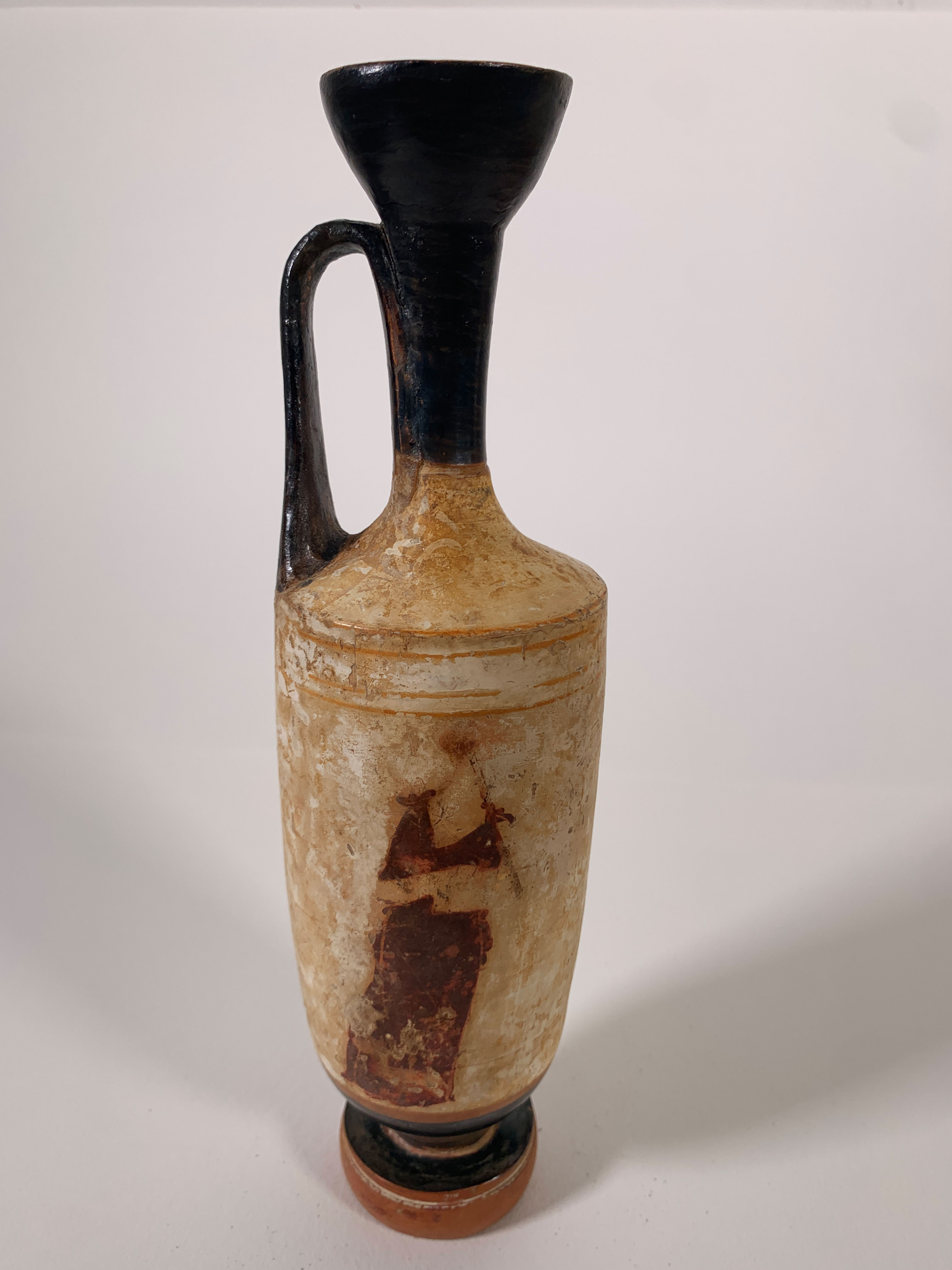
An Attic white-ground lekythos of standard funerary form, featuring a single painted figure in a posture of mourning or reverence. The figure, rendered in matte red-brown and dark brown pigments against the characteristic white slip ground, appears draped in a garment and stands in a contemplative pose. The composition is centered on the cylindrical body, framed above by a horizontal band at the shoulder.
The vessel has a tall, flaring mouth glazed in black, a single strap handle connecting the lip to the shoulder, and a disk foot with a reserved edge. The white slip that forms the painting ground covers the body from shoulder to foot, a technique reserved almost exclusively for funerary use in fifth-century Athens.
White-ground lekythoi occupy a unique place in the Attic ceramic tradition. Unlike the durable black-figure and red-figure techniques, white-ground painting employed fugitive pigments applied after firing, making these vessels too fragile for everyday use. They were produced specifically as offerings for the dead, placed at grave sites or deposited within tombs. The iconography typically depicts scenes of mourning, visitation at the graveside, or figures preparing offerings. This example, with its solitary mourning figure, belongs to one of the most common and emotionally resonant categories within the genre of ancient Greek funerary art.
Condition
The vessel is structurally intact with the mouth, handle, body, and foot all present. The white-ground slip shows considerable wear and flaking consistent with burial conditions and the inherent fragility of this technique. The painted figure is partially preserved, with enough detail remaining to identify the subject, posture, and drapery. Some areas of the white slip have darkened or discolored, likely due to soil deposits or past cleaning. The black glaze on the mouth, handle, and foot is stable with minor surface abrasion. No visible repairs or modern restoration.
Historical Context
The lekythos was the most common vessel form associated with Athenian funerary practice during the Classical period. Filled with olive oil or perfumed ungents, these vessels were brought to the grave as offerings and are frequently depicted in their own imagery, shown leaning against or standing at grave stelae. The white ground itself may have carried symbolic significance, evoking the white marble of funerary monuments.
Production of white-ground lekythoi peaked in Athens between approximately 470 and 400 BC, with workshops such as those of the Achilles Painter, the Thanatos Painter, and the Reed Painter producing some of the finest surviving examples. The form and decoration of this vessel are consistent with Athenian production during this period.
Specifications
- Object
- Lekythos (oil flask)
- Culture
- Attic Greek
- Period
- Classical
- Date
- circa 5th Century BC
- Medium
- Terracotta
- Technique
- White-ground with polychrome
- Function
- Funerary
- Iconography
- Mourning figure